
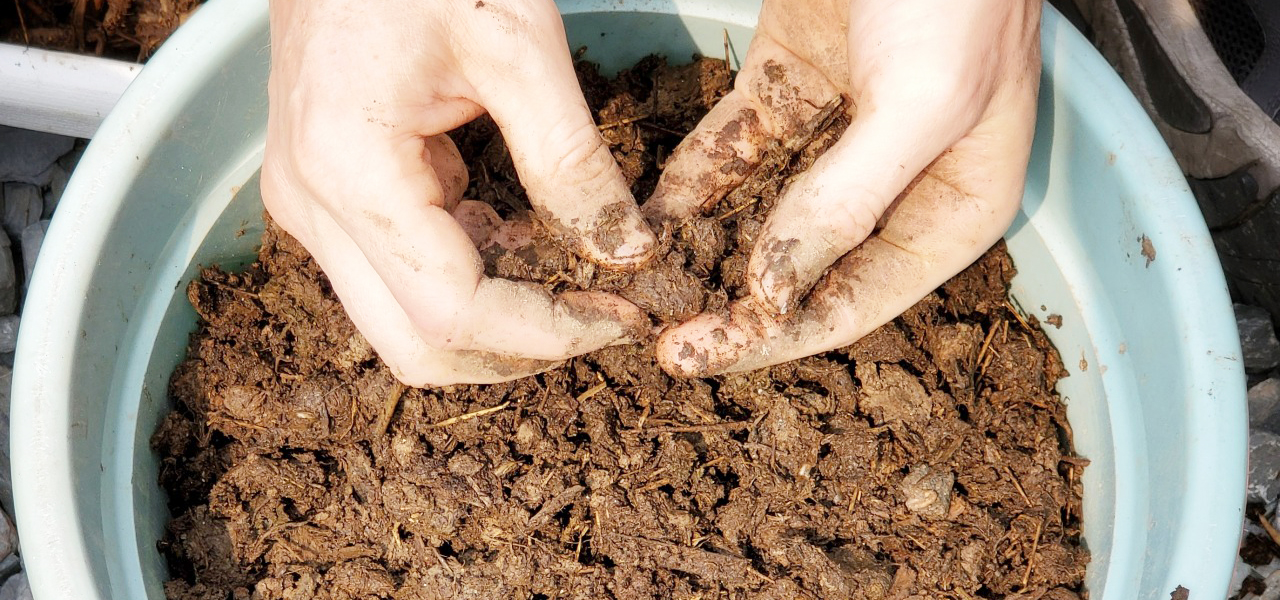
Yes, you absolutely CAN compost your food scraps in Shanghai! It’s simply a matter of finding which method will work best for you and your lifestyle.
There’s a misconception that compost is stinky, but if done correctly them compost doesn't smell like much at all, except perhaps slightly earthy. If you've ever smelled a stinky compost or trash, then that is caused by a problem with the decomposition process and is absolutely not typical!
Easy DIY apartment compost bin
Find a container to use for your compost. It can be as big or small as you like. Plastic boxes, metal containers, garbage bins or buckets all work well as long as they have a lid and you can put holes in it easily. You’ll also need a tray that fits underneath to catch the runoff and any spills.
Once you’ve chosen where to house your new compost bin, go ahead and put some holes in the bottom for the liquid runoff and around the rim for aeration. Then place the tray underneath, and add some newspaper, cardboard (or dried leaves if you have them) to the interior. Next add a little soil. The soil contains good bacteria which will kick start the composting process. That’s it, now you’re ready to compost! Add your chopped food scraps as you get them. The smaller they are the quicker they will break down. Keep a good balance between wet and dry scraps by adding more shredded newspaper or cardboard into the mix. Once a week turn the compost, and if you have it you can add a little more soil also to speed things along.
Only compost your green vegetable waste and newspaper/cardboard scraps. No dairy, meat or eggs. If the bin starts to smell it means the balance is off you may need to add more newspaper or add extra holes. If the bin fills up and hasn’t completely broken down yet you might want to have a second bin on hand to keep composting in.
Worm Bin composting
Worm bins are a great way to compost food scraps. They make excellent pets - being quiet, non-stinky and low maintenance. Worms generally like to be generally like the same temperatures we do, so work well indoors or outside on the balcony when temperatures range between 5 and 25 degrees C. Worms won’t survive outdoors when temperatures dip below freezing in summer they must be protected from overheating and drowning—so watch out for direct sun and rain.
Keeping your worms happy is a matter of ensuring that you have a good mix between carbon – rich and nitrogen-rich foods. Carbon can be added in the forms of paper, cardboard, news paper, dry leaves, etc, while nitrogen comes from your food scraps as well as coffee grinds and tea leaves. Ideally you should try to keep your compost around 50% carbon and 50% nitrogen to avoid any potential problems. A healthy compost pile will have an earthy, even pleasant, smell. If there is an odour then something is wrong. Don’t add and dairy or meat as that may lead to smells and problems if they take too long to break down. If there’s too much carbon in the bin, decomposition will slow down; if there’s too much nitrogen, the bin will emit smelly ammonia. One way to ensure that the worm bin stays healthy is not to add too much food or too often. I add food scraps to my bin every two or three weeks, but I sometimes abandon it for even longer. Use a spoon to take a peek at how things are decomposing. When your food waste looks sufficiently digested, go ahead and add some more.
You can find red wigglers, the composting worm, on Taobao bait shops. Or find a friend with a worm bin and ask for some for yourself.
You can make your own worm compost bin
The most basic homemade worm composter consists of a plastic bin perforated with holes (drainage holes in the bottom and ventilation holes in the top) and filled one third full with moistened, shredded newspaper. If you have the space, a better model uses two stacked bins —the upper tote perforated on the bottom for drainage and to allow the worms to travel upwards. The advantage of two bins is that when the lower layer is sufficiently full you simply add the second layer and feed the worms there. They will gradually move up into the top storey and you can harvest the finished compost from the bottom bin without having to separate the worms from the soil.
Or you can easily buy one on taobao:
If you don’t have the time or energy to make your own worm composter, there are plenty of good options on Taobao that are very suitable for apartment living.
Here are some search terms to put into taobao to get you started:
蚯蚓堆肥箱 - Qiūyǐn duīféi xiāng - Earthworm compost bin
活体红蚯蚓 - Huótǐ hóng qiūyǐn – Living Red Wriggler worms
诱饵红蚯蚓 - yòu'ěr hóng qiūyǐn – Bait Red Wriggler worms

Compost Tumbler
If you are lucky enough to have a good-sized balcony or terrace, or maybe you even have your own garden space, you have another composting option to consider: compost tumblers.
Larger than worm composters, compost tumblers are sealed to preserve the heat generated by your compost—thereby increasing the speed of decomposition. The compost barrel itself can be rotated (or tumbled) to help aerate and mix the contents. Because they are sealed and raised, compost tumblers also avoid the common pest problems associated with compost bins e.g. rats and mice, and their sealed design also means they don’t smell, so they are a tidy, attractive option for more visible or communal areas.
A compost tumbler may be right for you if you have the space to put one. At some point you’ll need to stop adding scraps to a tumbler so it can fully digest the materials. To solve this issue, some tumblers have dual compartments so you can add kitchen scraps to one side while the other composts. Due to their larger size some people may find larger compost tumblers hard to rotate when full. In this case, you may not want to fill it completely before allowing it to process.
Compost tumblers generally hold more material than worm composters so are a good option for those with a lot of kitchen waste.
Find compost tumblers on Taobao by searching for :
旋转堆肥桶 - Xuánzhuǎn duīféi tǒng - Rotating compost bucket

Bokashi
If you've ever met me in real life and we've ever talked compost (it happens more often than you think!) then you will know that I am not a big fan of bokashi for apartment dwellers. The premise itself is great - all food scraps go into a bin and an activator is added and voila! 4 weeks later you have compost. Except that in reality that's not what happens. The crucial thing about bokashi composters is that they require the pickled matter to be buried in the garden to finish off the decomposition process. Bokashi does not give finished compost and needs an additional system to finish the process. And for those of us living in apartments this is impossible. I would only ever recommend bokashi to those with access to space to bury the waste otherwise it quickly becomes impossible and impractical to continue with this method.